
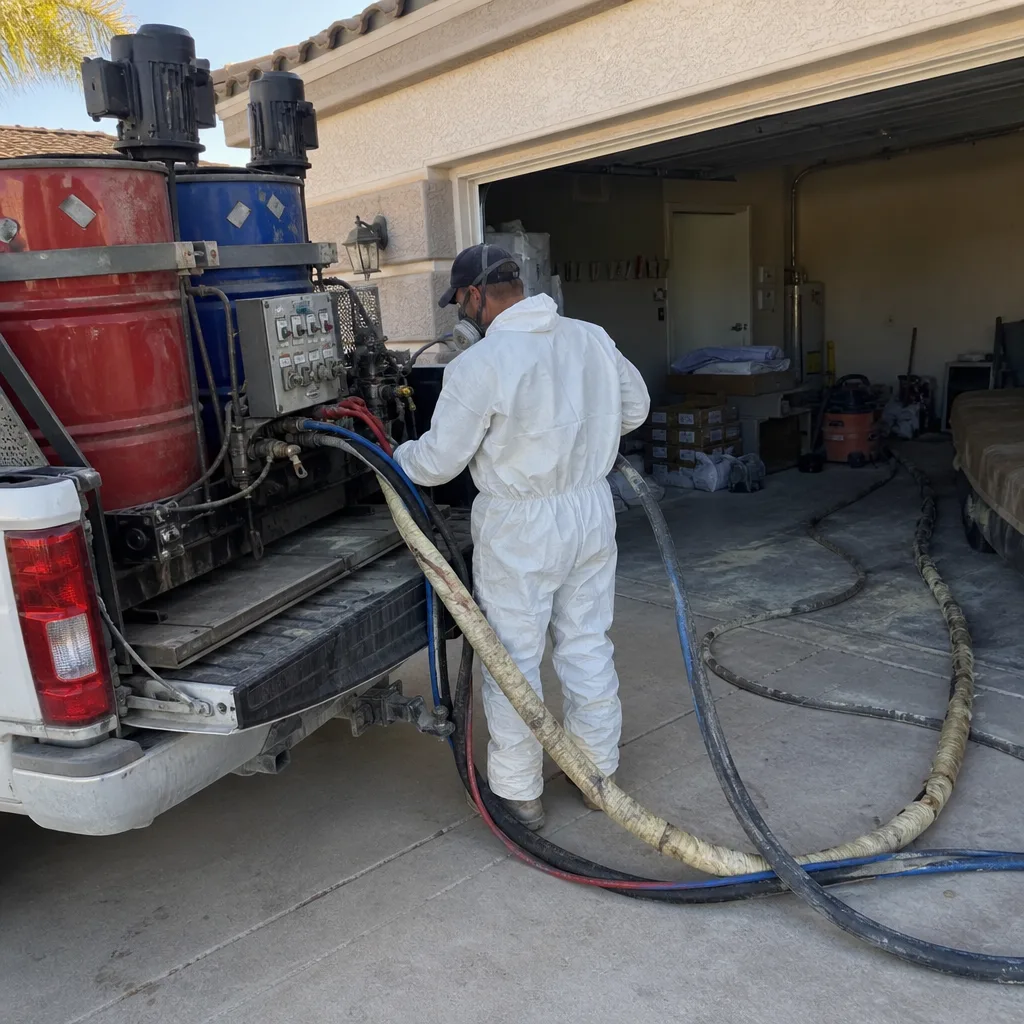
How Much Does Radiant Barrier Installation Cost in Boulder City?
Radiant barrier installation in Boulder City typically costs $1,000 to $3,000 for most attics, with the final price set per job by a written estimate. A straightforward single-family attic usually lands near the lower half of that range, while larger square footage, steep rooflines, or a barrier wrapped with air sealing pushes it toward the top. Radiant barriers don’t add R-value the way fiberglass or spray foam do; they cut the radiant heat coming off a sun-baked roof deck before it can soak into the attic, which matters in a desert town with this much sun. Call (888) 291-3864 for a free estimate.
Radiant Barrier Installation Cost Breakdown (2026)
Here’s how a typical radiant barrier job breaks down for a Boulder City home. These are estimated ranges, not quotes. Your written estimate fixes the final price once we see the attic.
| Line Item | Typical Estimated Range |
|---|---|
| Radiant barrier material and installation (foil or foil-faced barrier to the roof deck and gables) | $1,000 – $3,000 |
| Additional attic air sealing done alongside the barrier (hatch, wiring penetrations, top plates) | $600 – $2,000 |
| Radiant barrier paired with blown-in insulation (for lower ceiling temperatures plus held-in thermal performance) | $1,200 – $3,500 (blown-in portion) |
| Radiant barrier paired with spray foam on the roof deck (foil-faced foam options) | $2,500 – $8,000 (spray foam portion) |
| Attic insulation removal and replacement before or alongside a barrier install, when old material has to come out | $1,500 – $5,500 |
The biggest driver of your price is attic size and shape, not which material we choose. A low-roof single-story ranch with an open, unobstructed deck lets technicians lay a barrier quickly. A two-story home with a dozen roof valleys, HVAC ductwork strung through the middle, and a low crawl space that forces a tight working position all add labor. So does a barrier that has to be installed foil-side-up versus foil-side-down, because radiant barrier orientation affects how it performs and how it’s fastened. The written estimate accounts for all of this before we start, so you’re not guessing which number you’ll land on.
Radiant barrier is a strong fit for the housing stock in this area, which tends toward stucco and block homes with pitched roofs and a lot of afternoon sun exposure. Homes near Boulder City‘s older neighborhoods tend to have simpler roof framing and shorter attics, while newer builds often have more complex geometry. Both shapes can be done, but the labor number moves.
What Affects Radiant Barrier Installation Pricing in Boulder City
Five or six things mostly determine where your job lands in the $1,000 to $3,000 range.
- Attic square footage and roof pitch. A larger footprint means more material and more time on ladders and staging. A pitch that’s walkable is faster than a steep roofline that requires extra safety rigging.
- Whether the barrier goes on the roof deck or the joists. Roof-deck installation is the more common approach for radiant performance, but it needs the deck to be clean and dry and clear of old material. Joist application is a different scope with different material.
- Ventilation balance. A radiant barrier plus a poorly vented attic can bottle up heat or moisture, so we check ridge and soffit venting and adjust the scope. Balancing ventilation is a big part of what our technicians do; they’ve got up to 15 years of experience specifically working in attics, not rotating through other trades.
- Existing insulation and old material. If there’s a layer of aging, compressed material on the deck or joists, we may need to remove and replace it first (see the insulation removal line above) before a barrier can be installed cleanly.
- Ductwork, wiring, and obstructions. Ducts crossing the joists, recessed lights, and soffit chases all get worked around, which adds time. A clean, empty attic is a faster job.
- Whether you combine it with air sealing or insulation. A barrier on its own is a radiant-heat fix. Adding air sealing or a layer of blown-in cuts the total combined cost versus doing the two projects separately, and it usually makes more sense in a hot desert climate.
How to Save on Radiant Barrier Installation
You can keep the price down without cutting corners. A few practical moves:
- Clear the attic first. Move stored boxes, holiday bins, and anything piled on the deck or joists out before the crew arrives. Time saved in the attic shows up on the estimate.
- Combine projects. If your attic also leaks air at the hatch or top plates, or your existing insulation has gone flat, do the barrier and air sealing in one visit rather than two separate mobilizations. attic insulation boulder city work pairs naturally with a barrier.
- Fix ventilation before the barrier. If ridge or soffit vents are blocked, that’s a fix, not an add-on to delay. Poor venting can undo the benefit of a barrier, so address it in the same scope.
- Get a written estimate, not a phone number. A range is useful for the ballpark; a written, itemized estimate is the number that matters. We offer free estimates, so there’s no cost to get the real number in hand. Call (888) 291-3864 and we’ll schedule the assessment.
- Ask which material the job actually needs. We’re a focused attic specialist with eight brands behind us, including Owens Corning, Rockwool, and Icynene. Every quote is matched to your attic’s conditions, not to whatever happens to be in a truck.
Is Radiant Barrier the Right Choice for a Boulder City Attic?
Radiant barrier makes sense in Boulder City because of how much direct sun this home market sees. A radiant barrier reflects radiant heat coming off the roof deck before it can radiate into the attic air and, from there, into your ducts and ceilings. It’s a different tool from fiberglass or blown-in insulation, which slow conductive heat and are rated by R-value. Many homeowners here get the best result by pairing a barrier with attic insulation so the thermal performance holds while the radiant load is cut. That’s why our quotes often show both lines side by side rather than a barrier on its own.
Radiant barrier also doesn’t fix an airtightness problem. If your problem is hot rooms, high bills, and an attic that leaks air at the hatch or wiring penetrations, a barrier alone won’t close that gap; air sealing will. Our technicians look at both in a single assessment and tell you which fix your attic actually needs.
What the Installation Involves
The work itself is straightforward once the scope is set. Technicians lay foil or foil-faced barrier over the roof deck or joists, cutting around roof valleys, penetrations, and any HVAC ductwork in the way. The barrier has to be positioned correctly for the application (foil-side facing the right space), and all overlaps are sealed so it performs as a continuous reflective surface rather than a patchwork. Where a barrier meets insulation, spray foam, or air sealing, the two are sequenced so one doesn’t undo the other.
Our technicians work in three distinct insulation methods: attic insulation in batts and rolls, spray foam, and blown-in. Radiant barrier sits alongside those. Because the focus is attic-only work, we’re calibrated to attic-specific issues like ventilation balance, hatch air leakage, and irregular joists, rather than pulling from a generic home-services playbook. Note that radiant barrier installation isn’t a DIY-friendly job for most attics: foil barriers are a fire and moisture consideration when poorly installed, working around hot ductwork and wiring is a safety matter, and getting the ventilation balance wrong can cause problems worse than the heat you started with. It’s work for trained technicians.
Radiant Barrier vs. Other Attic Upgrades: How the Prices Compare
Homeowners often ask how a radiant barrier stacks up against other attic work, so here’s the side-by-side with our typical estimated ranges. Understanding the differences helps you decide where your money goes first.
- Radiant barrier installation: $1,000 – $3,000. Cuts radiant heat load; best paired with insulation or air sealing.
- Attic air sealing: $600 – $2,000. Stops leaks at the hatch, top plates, and penetrations. Often the first thing to do.
- Blown-in insulation: $1,200 – $3,500. Fills the attic floor with a continuous layer of material; strong cost-per-performance for most homes.
- Attic insulation (batts and rolls): $1,500 – $4,500. Best where joists are even and access is clean.
- Spray foam insulation: $2,500 – $8,000. Air-seals and insulates in one pass; our foot in the door here is both open- and closed-cell (Icynene and Demilec).
- Insulation removal and replacement: $1,500 – $5,500. Needed when old material has failed and a fresh install depends on a clean deck.
- Wall insulation: $1,500 – $5,000. For homes where walls are under-insulated; a different scope entirely.
If you’re trying to decide where to start, the honest answer usually depends on which problem you’re solving. Radiant barrier is the right pick when afternoon sun loads your attic and your insulation is otherwise adequate. If your ceiling temperatures are high because there’s barely any insulation up there, the barrier is a supporting act, not the headline.
FAQs – Radiant Barrier Installation Cost
How much does radiant barrier installation cost in Boulder City?
Radiant barrier installation in Boulder City typically costs $1,000 to $3,000, with the final price set per job by the written estimate. Most single-family attics fall in that range; larger or more complex roofs push toward the top. Call (888) 291-3864 for an exact quote; estimates are free.
Is it cheaper to install a radiant barrier or more insulation?
It’s not a like-for-like comparison, so the “cheaper” answer depends on what’s wrong. Blown-in insulation at $1,200 to $3,500 is often the more direct fix when your attic is under-insulated. A radiant barrier at $1,000 to $3,000 is the better fix when the attic is already insulated but radiant heat from the roof deck is the problem. Many homes need both. Call (888) 291-3864 and we’ll tell you which one your attic actually needs.
How long does radiant barrier installation take?
Most jobs are a single-day install once the scope is set, depending on attic size and access. Larger homes or a combined barrier-plus-air-sealing scope may carry into a second visit. Your written estimate spells out the expected timeline. Call (888) 291-3864 to schedule the assessment.
Does a radiant barrier really reduce cooling costs in Boulder City’s heat?
It can help lower cooling loads in this climate, but results depend on the attic and the home. Radiant barrier targets radiant heat specifically, so it performs best when ventilation is balanced and the attic is air-sealed and insulated. On its own it won’t fix an under-insulated attic. Call (888) 291-3864 to find out which combination makes sense for your home; the estimate is free.
Can you install radiant barrier and attic insulation in the same visit?
Yes. In most attics the barrier and the insulation can be scoped together as one project, which is often less than doing them separately. Expect the combined estimate to reflect both line items: the barrier at $1,000 to $3,000, plus the insulation portion depending on method. Call (888) 291-3864 and we’ll price them together.
Get Your Written Estimate
A radiant barrier is one of the simplest things you can add to a Boulder City attic, but the price comes down to your attic’s size, shape, and ventilation. We offer free estimates, so getting the real number involves no guessing. Call (888) 291-3864. We answer 24/7. Fast dispatch from 7am to 7pm, Sunday through Friday. Closed Saturday. Our technicians have up to 15 years of experience in attics, and we’ll tell you straight whether a barrier, air sealing, insulation, or a combination is the right call.
Pricing reflects the Boulder City market as of 2026. Attic Insulation Boulder City offers free estimates – call (888) 291-3864.
Written by the team at Attic Insulation Boulder City.
What Our Customers Say
"Attic was at maybe R-11 from the 1970s and blown in over the top would have just buried the problem. They removed the old material, air sealed the top plates and penetrations first, then blew in to R-49. The upstairs is a completely different house in August."
- Craig Fletcher"Found and sealed a gap around the chimney chase that was basically an open chimney to the attic."
- Norma Torres"Handled the utility rebate paperwork, which knocked a real amount off the final cost."
- Maya Sharma